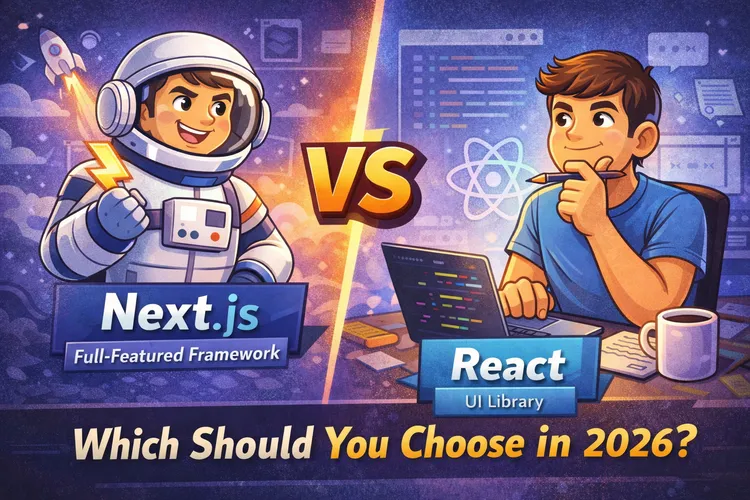
Next.js vs React: Which Should You Choose in 2026?
If you’ve been learning frontend development, you’ve probably seen React and Next.js everywhere. They’re often mentioned together, which makes things confusing.
So let’s keep it simple.
First, Understand the Difference
This is the most important part:
React is a library for building user interfaces Next.js is a framework built on top of React
React gives you flexibility. Next.js gives you structure and built-in features.
How They Feel to Use
Think of it like this:
React = blank canvas Next.js = ready-to-use system
With React, you decide everything yourself With Next.js, a lot is already handled for you
This includes routing, rendering, and performance optimizations.
Performance & SEO
This is where Next.js stands out.
Next.js supports server-side rendering (SSR) and static generation This makes pages load faster and improves SEO
React apps usually rely on client-side rendering, which can be slower on first load.
When React Is Enough
React still makes sense if:
You’re building a simple app or internal dashboard SEO is not important You want full control over your architecture You prefer choosing your own tools
React is flexible, but you’ll need to set up more things yourself.
When Next.js Is the Better Choice
Next.js is usually better if:
You care about performance and SEO You want faster setup with less configuration You’re building production-ready apps You prefer having structure out of the box
It basically saves you time by handling common problems for you.
So, Which One Should You Pick?
There’s no absolute winner.
Choose React if you want flexibility and control Choose Next.js if you want speed, structure, and built-in features
In 2026, many teams actually use Next.js as the default way to build React apps, especially for production projects.
Final Thought
Don’t overthink it.
Both tools are great. The real question is:
Do you want more control, or do you want things done for you?
Pick based on your project, not hype.